I build your authority and grow your revenue. You show up a few hours a month.
Your content partner — strategy, video, and distribution.
Brands I've worked with


Most founders know content works. They just don't have the right system.
The Agency Trap
You hired someone to make videos. They didn't understand your business.
They optimized titles and thumbnails. They copied what's trending. But nobody was thinking about what your customers need to hear, or how content connects to your pipeline. That's not a content problem. That's a thinking problem.
The Time
You tried doing it yourself. It lasted two–three weeks.
Scripting, recording, editing, posting, promoting. Every video is a full day. You did it once, maybe twice, maybe three times. Then your business needed you and content dropped off. It's been "on the list" ever since.
The Disconnect
You got a strategy. But nothing got made.
You hired a consultant or an agency who gave you a content plan — maybe even a good one. Messaging pillars, audience segments, a posting calendar. Then you had to execute it yourself, or hand it to a freelancer who didn't understand the thinking behind it. The plan sat in a Google Doc. The strategy and the execution lived in two different worlds.
You know there's so much more your content could be doing. You just need someone who thinks deeper about it — and builds it.
How we work together.
I learn your business well enough to sell your product.
Not "what's trending on YouTube." Your customers, your sales process, your competitors, the objections you hear on calls, what you've tried before. I've done this 90+ times — sat across from CEOs and founders and figured out what's actually interesting about their business. Sometimes it's obvious. Usually, they can't see it themselves.
If I can't sell it, I can't make content about it. That's the bar.
I research what will actually work — before writing a single script.
For some founders, the niche is clear and I just need to find the best angles. For others, this is the hard part — figuring out the narrative, the positioning, what makes you different from the 50 other people in your space.
Either way, I don't guess. I research.
Before a single script gets written:
- YouTube search & SEO — What your ideal customers are actually searching for. Which topics have real demand. What's ranking, what's missing.
- Competitor content analysis — What others in your space are publishing. What's working for them. Where the gaps are.
- ICP behavior mapping — Where your audience spends time online. What they engage with on LinkedIn, YouTube, other platforms. What makes them stop scrolling.
- Topic strategy — The intersection of what you should say, what your audience wants to hear, and what will actually get found.
I come from the buyer's side. I've been the marketing leader, the demand gen lead, the person who had to make content actually drive pipeline. I don't think like a creative agency. I think about what your customer needs to hear before they buy.
I produce it — starting with YouTube.
YouTube is the anchor platform. Not because it's trendy — because it's the platform that compounds. A video you publish today gets found six months from now — in YouTube search, in Google results, in AI answers. No other platform does that.
Every video starts with a script built to hook, structured to hold attention, and optimized to be found. Then my team handles the editing, thumbnails, and optimization.
But the video is just the beginning. From one YouTube video:
- 3-4 short-form videos — not clips chopped from the recording, but moments recut and formatted for Shorts, LinkedIn, and Reels
- Platform-native posts — key ideas from the script turned into LinkedIn posts, threads, and written content built for each platform
- Supporting assets — pull quotes, hook variations, thumbnails
Every piece is platform optimized. The script is the source material — not the video file. That's why it works. The thinking is done once, deeply. Then it gets expressed in every format that fits.
YouTube videos are the anchor. Everything else comes from them. You showed up for a recording session.
I test what works — and cut what doesn't.
YouTube is the long game. Every video keeps working — it gets found in search, recommended by the algorithm, surfaced by AI. The library compounds. That's why it's the core.
Social is where I experiment. If a format isn't landing on LinkedIn, I try a different angle. If short-form is outperforming, I lean in. If a topic resonates on YouTube but falls flat on threads or X, I figure out why and adjust.
Nothing is on autopilot.
See the work.


I don't talk about content. I make it.
What clients say.
The first draft of the video was so much better and closer to what I had in mind than probably what I could have articulated to you that I wanted.

You took the scripting from me and you hit the nail on the head in the first try. That's the amazing part.


Sway One was able to crack this problem and build a scalable branding system that works. $1.2M in influenced pipeline. 85 videos. One year.

300% pipeline growth in 6 months.
Christian Radley built Ziggy into a successful demand gen agency, but after two years, growth had plateaued. His network was tapped out. Monthly results were volatile.
We built a content system around one 90-minute recording session per month. I handled the strategy, the scripting, the editing, the distribution — everything. That single monthly session became the engine for his entire content presence.
220,000 LinkedIn views. Prospects started referencing the videos in sales meetings. Pipeline grew 300% in six months.
"When you are in a sales meeting and people remember a video that they'd watched that you have put out there. That's the type of validation that matters."

What's included.
Research-driven content strategy.
Your market, your competitors' content, your audience's behavior — studied before a single script gets written.
YouTube videos are the core — and everything else comes from them.
Short-form clips, platform-native posts, supporting assets. Every piece built for where it lives. You show up to record, I handle the rest.
Monthly strategy call + async access.
Review, plan, adjust. Questions between calls — no waiting.
What you do.
per month. That's it.
One–two deep conversations
At the start so I understand your business inside and out.
Hit record
I send you topics and scripts. You record when it's time.
Approve & publish
Review the final content before it goes live. That's it.
Every founder's situation is different. Your content strategy should be too. Scope and pricing are built around what you actually need.
- Strategy built around your business
- 1–4 pillar videos per month (YouTube-first)
- Short-form videos cut for distribution
- Multi-platform content (LinkedIn, Shorts, threads)
- Monthly strategy call
- Async access between calls
No commitment to start a conversation.
No long-term lock-in if we work together.
Questions you might have.
Who's behind this.
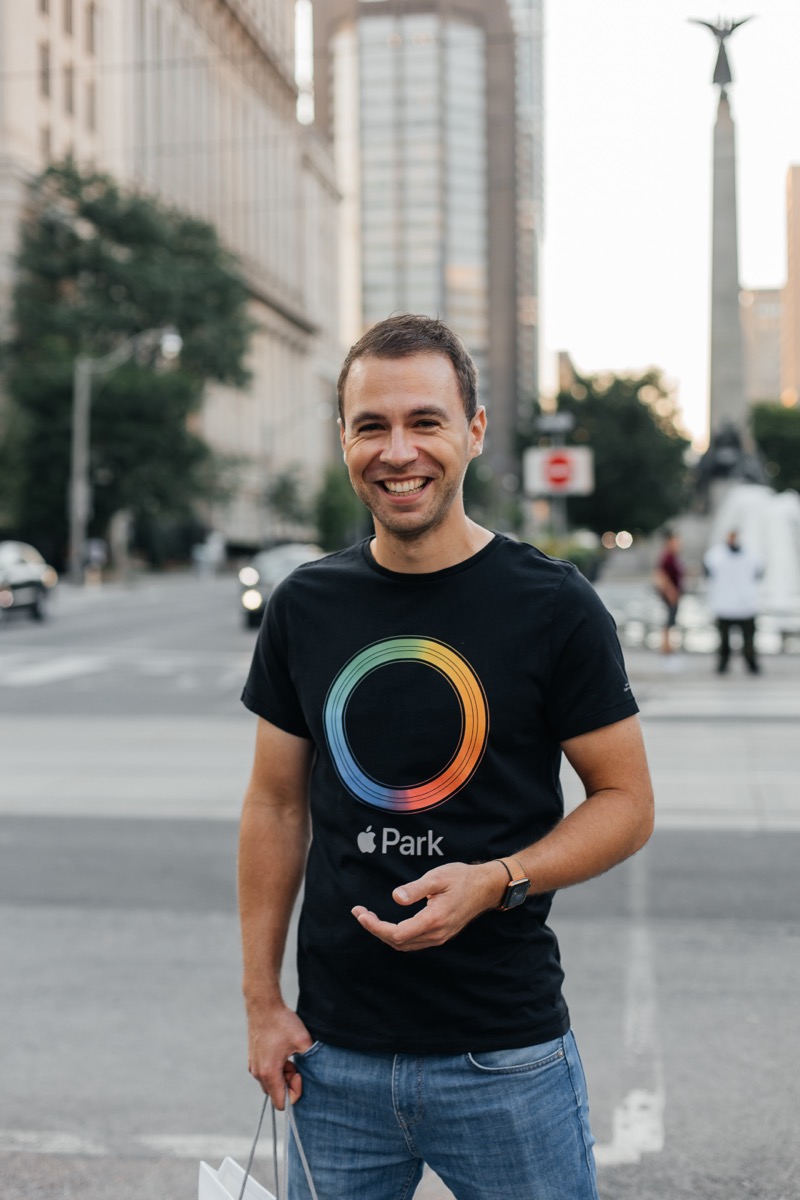
I'm Sergey.
I started a company in Lisbon with six weeks of runway and no safety net. I know what it's like to build from nothing — the financial pressure, the impossible decisions, the late nights wondering if it's going to work. When I work with founders, I'm not advising from the sideline. I've been in it.
Before that: 9 years in B2B — demand generation, enterprise sales, marketing ops, MarTech consulting. I've been the marketing leader who had to make content actually drive pipeline. I've sat through the sales demos, fought for budget, and watched agencies deliver beautiful videos that did absolutely nothing.
Then I started producing content myself. 6 podcasts. 90+ CEO and founder interviews. A YouTube channel that hit 350,000 views on a single documentary. 26,000 TikTok followers making educational content — no gimmicks, no dancing.
I work with a small number of founders because the work is better when I go deep. I'm not scaling an agency. I'm one person who does the thinking and the building.
If I wasn't doing this, I'd be making documentaries about technology. Story, pacing, what to cut, what to keep, what makes someone stop and watch — it's in everything I do.
Let's see if this makes sense.
30-minute call. I'll ask about your business, your audience, and what you've tried. If I think I can help, I'll tell you exactly how. If I can't, I'll tell you that too.
Book a call